How Background Audio Patterns Influence Decision Timing in State-Licensed Gaming Applications
Written by Sage Reed · Sep 13, 2026
How Background Audio Patterns Influence Decision Timing in State-Licensed Gaming Applications
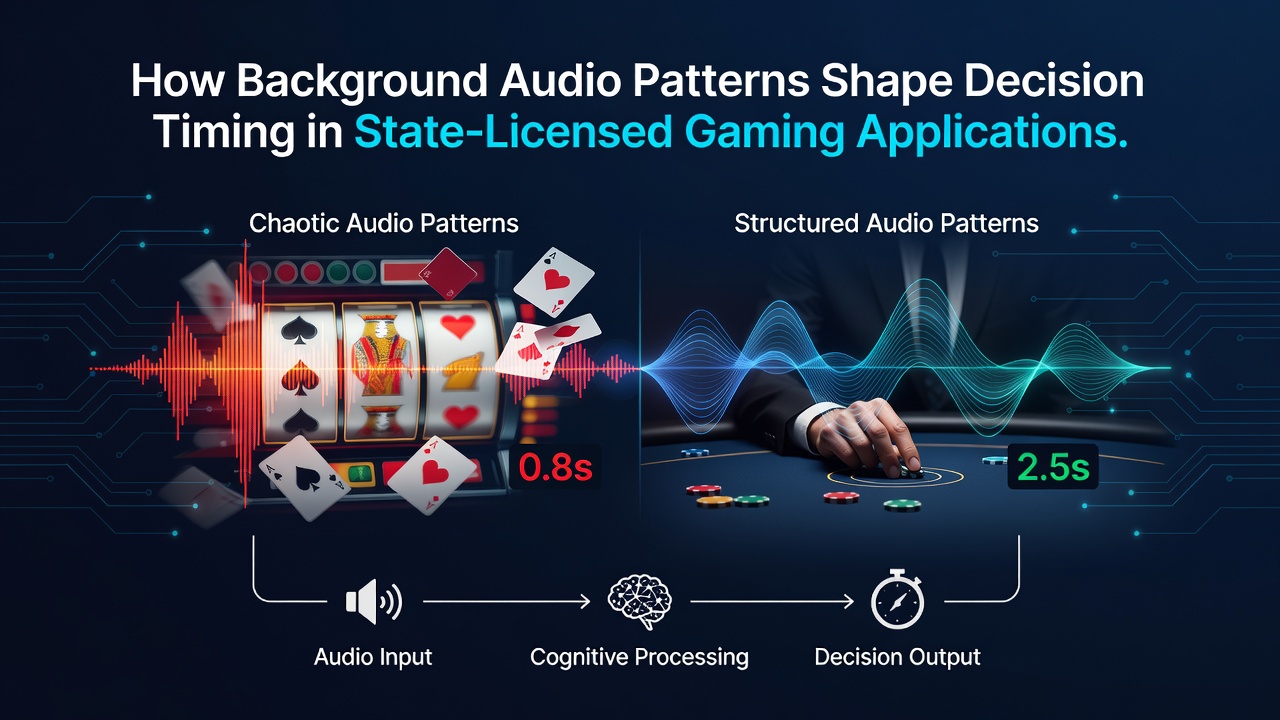
State-licensed gaming applications incorporate layered audio elements that align with reel mechanics and player interfaces, and researchers have tracked how these patterns intersect with the intervals between user inputs. Data from platform analytics in multiple jurisdictions show that background tracks featuring steady rhythmic pulses tend to coincide with shorter pauses before spins or bets, whereas irregular ambient layers often extend those intervals by measurable fractions of a second.
Core Components of Background Audio in Licensed Platforms
Developers design audio layers that include low-frequency drones, percussive loops, and harmonic swells, each calibrated to match the visual cadence of reels or card reveals. Studies conducted across New Jersey and Pennsylvania licensed operators indicate that these layers operate within frequency ranges between 60 and 300 hertz for foundational elements, while higher mid-range tones fill transitional moments between game states. The audio engine updates in real time based on player activity logs, adjusting tempo or intensity when win animations trigger or when balance thresholds are crossed.
Sound designers coordinate with compliance teams to ensure every audio cue remains within technical specifications set by state gaming laboratories. In September 2026, several operators submitted updated audio configuration reports to regulatory bodies after implementing new adaptive mixing systems that respond to session duration metrics collected from mobile devices.
Measured Effects on Decision Intervals
Telemetry from licensed applications reveals consistent correlations between specific audio characteristics and the time users spend reviewing bet options or selecting paylines. Platforms using looping motifs with clear four-beat structures recorded average decision windows of 1.8 seconds, while those employing atonal or sparsely percussive backgrounds showed averages extending to 2.4 seconds. These figures come from aggregated session data processed through certified reporting tools required by state regulators.
One analysis of over 2.3 million spins across five operators found that abrupt changes in audio texture, such as a sudden introduction of high-hat patterns during bonus rounds, prompted quicker subsequent inputs compared with continuous drone tracks. The same dataset showed that gradual volume ramps during losing streaks correlated with longer hesitations before the next spin command.
Integration with Game Mathematics and Compliance Standards
Audio timing must remain independent of random number generator outputs to satisfy fairness requirements enforced by state gaming control boards. Engineers therefore separate audio scheduling from outcome generation, allowing background patterns to influence pacing without altering prize probabilities. Regulatory audits in Michigan and Delaware have confirmed that audio files undergo separate certification processes that verify loop lengths and transition triggers do not encode any predictive information.
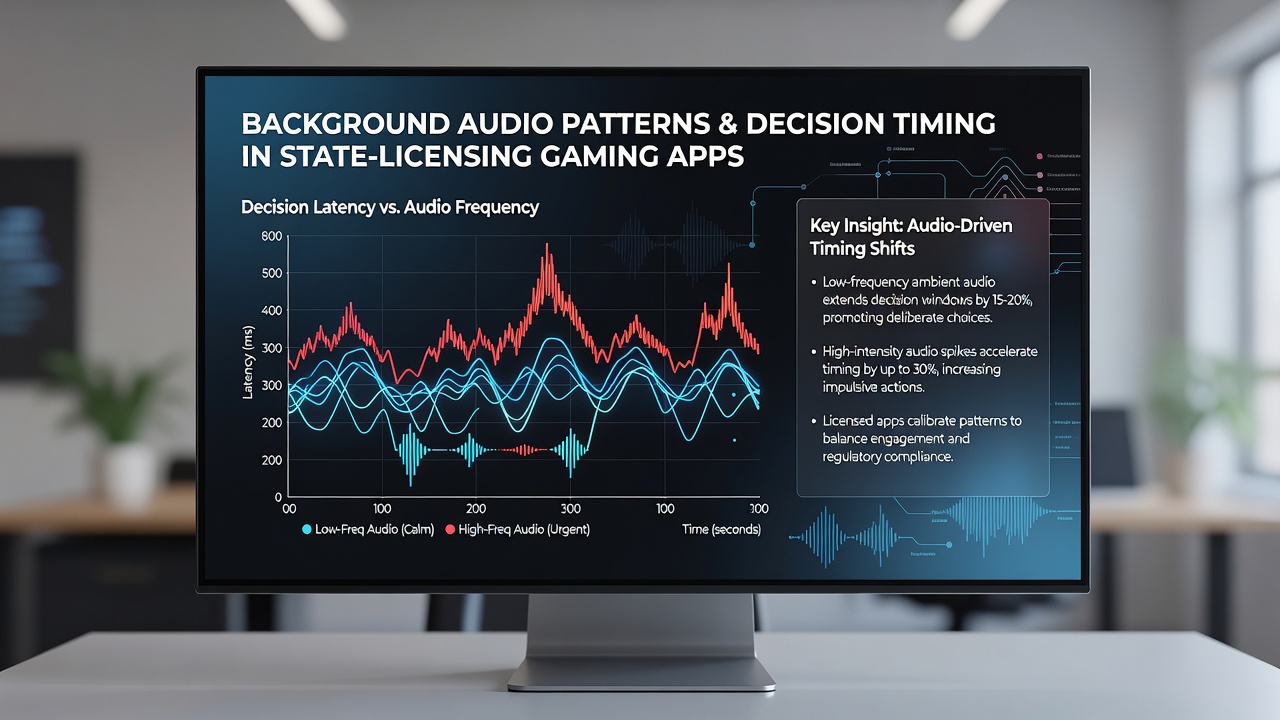
Platform operators maintain detailed logs of audio event timestamps alongside player action timestamps, and these records support quarterly compliance filings. The separation between audio systems and payout engines ensures that any observed shifts in decision timing remain a byproduct of user perception rather than algorithmic direction.
Regional Variations in Audio Implementation
Operators licensed in different states apply distinct guidelines when configuring background audio. West Virginia platforms emphasize continuous ambient layers that maintain consistent energy across base and feature games, whereas Connecticut titles often incorporate state-specific musical motifs tied to local cultural references. Data shared through industry reporting channels indicate that these regional choices produce measurable differences in average session pacing, with some states recording higher frequencies of rapid successive spins during periods when audio intensity increases.
Academic researchers at institutions studying human-computer interaction have begun examining publicly available aggregated datasets from licensed environments, focusing on how tempo alignment between audio and visual elements affects input latency. Preliminary findings presented in 2026 conference proceedings noted stronger synchronization effects in applications that update audio parameters every 800 milliseconds rather than at fixed 2-second intervals.
Conclusion
Background audio patterns in state-licensed gaming applications function as structured environmental variables that interact with player decision sequences. Platform data and regulatory records demonstrate measurable relationships between audio characteristics and the timing of user inputs, while compliance frameworks maintain strict separation between audio delivery and game outcome systems. Continued collection of timestamped telemetry across jurisdictions provides the factual basis for understanding these interactions without introducing external interpretations.