Regional Time Zone Variations and Bonus Activation Rates in Global Mobile Gaming
Written by Felix Schmid · Oct 25, 2026
Regional Time Zone Variations and Bonus Activation Rates in Global Mobile Gaming
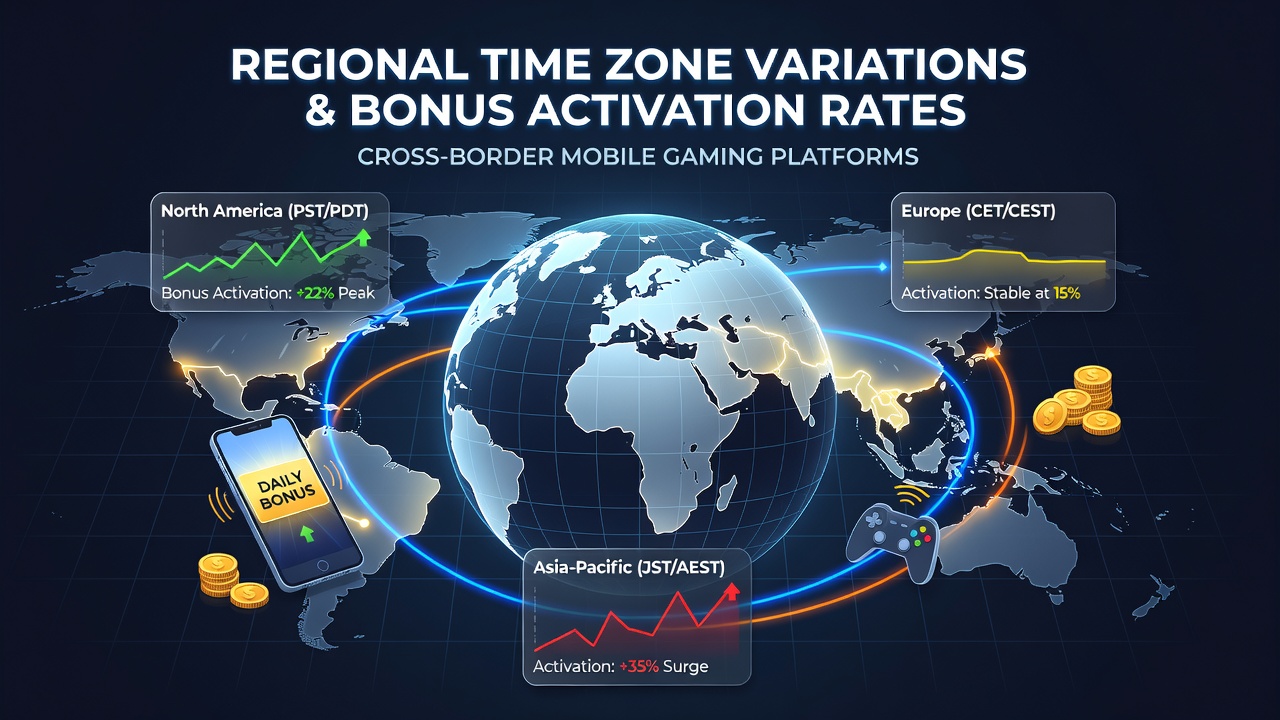
Time zone differences create measurable shifts in bonus activation rates across cross-border mobile gaming platforms, and operators track these patterns through server logs that record player locations alongside claim timestamps. Platforms set bonus resets according to coordinated universal time or specific regional anchors, yet players experience those resets at varying local hours depending on their geographic position, which leads to clustered activity in certain zones while others show lower engagement during equivalent periods.
Mechanics Behind Time-Based Bonus Structures
Many mobile gaming systems trigger daily bonuses at midnight according to the platform's chosen reference zone, and this creates a ripple effect where users in earlier time zones access rewards hours before those further west, while players in later zones encounter the same offers after their local midnight passes. Data collected from major operators indicates activation spikes occur most frequently within the first two hours after reset in regions aligned closely with the server clock, whereas distant zones experience delays that reduce immediate uptake by 15 to 30 percent during overlapping daylight periods. Researchers analyzing login patterns across multiple platforms note that simultaneous global events, such as weekend promotions, amplify these discrepancies because the fixed reset time intersects differently with local routines like commuting or work schedules.
Observed Patterns Across Continents
Platforms operating in October 2026 report consistent variations tied to continental divides, with European users often showing higher activation during evening local hours compared to North American counterparts who encounter the same offers during midday. One study of cross-border traffic revealed that Asian markets aligned closer to the reference zone achieve peak bonus claims before European peaks begin, creating staggered waves of activity that operators monitor to adjust server load. These differences extend to progressive features where time-limited multipliers reset on the same schedule, and figures from industry reports show activation rates drop in zones where resets coincide with standard sleep hours.
Data Insights from Platform Analytics
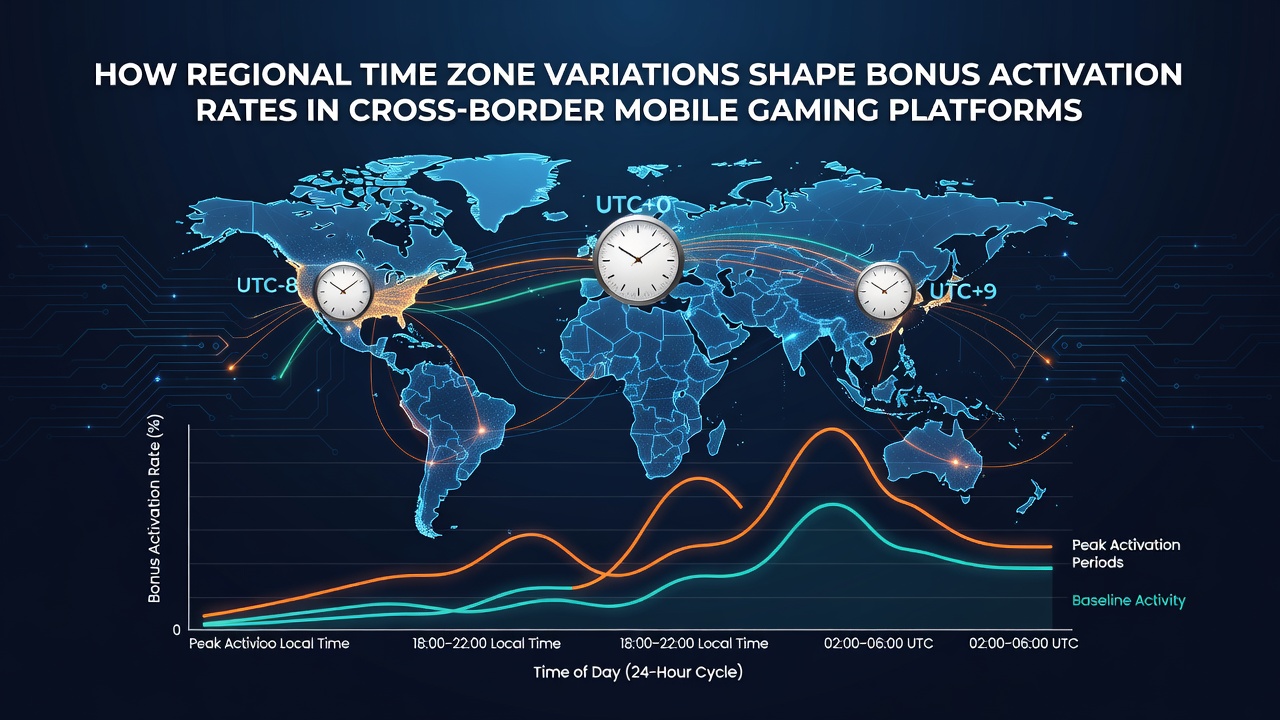
Analytics from large-scale deployments demonstrate that activation rates correlate directly with the offset between local time and the platform's reset anchor, and operators adjust marketing pushes accordingly to capture delayed users. According to findings compiled by the Government of Canada consumer research division, platforms serving multiple North American provinces alongside European markets recorded up to 22 percent higher claim volumes in zones where bonuses aligned with post-work hours. Similar patterns appear in reports covering Australia and Southeast Asia, where researchers at the Australian Communications and Media Authority documented lower engagement when resets fell during standard business periods.
Cross-border users frequently switch devices or networks, yet the underlying time stamp remains fixed to the account's registered region or detected location, which preserves the activation differential even as players travel. Observers tracking session data note that promotional extensions sometimes mitigate these effects by offering grace periods, although core reset mechanics continue to favor certain longitudes over others throughout the calendar year.
Regional Examples and Platform Adjustments
Take one operator that maintains servers anchored to Central European Time and serves users from the Americas, where activation data shows North American players claim bonuses at lower rates during their morning hours while European users engage immediately upon reset. Those who've examined aggregated logs across similar services find that targeted notifications sent at local peak times help narrow the gap, yet the fundamental time offset persists. In October 2026, several platforms introduced dynamic reset options tied to user profiles, and preliminary figures indicate modest improvements in activation uniformity without altering the underlying zone structure.
Industry associations tracking mobile gaming trends continue to compile comparative statistics that highlight these geographic influences, and the resulting datasets allow developers to refine bonus timing algorithms for broader accessibility.
Conclusion
Regional time zone variations produce distinct activation rate profiles on cross-border mobile gaming platforms, with server reset anchors creating predictable differences based on geographic offset. Data from regulatory and research sources confirm these patterns persist across continents, and operators respond through adjusted timing and notifications while maintaining consistent global mechanics. As platforms evolve their systems, the relationship between local time and bonus availability remains a key factor in engagement distribution.